How to Remove Pet Hair from Upholstered Furniture
Your Guide to Cleaner Upholstery, Even with Furry Friends Around
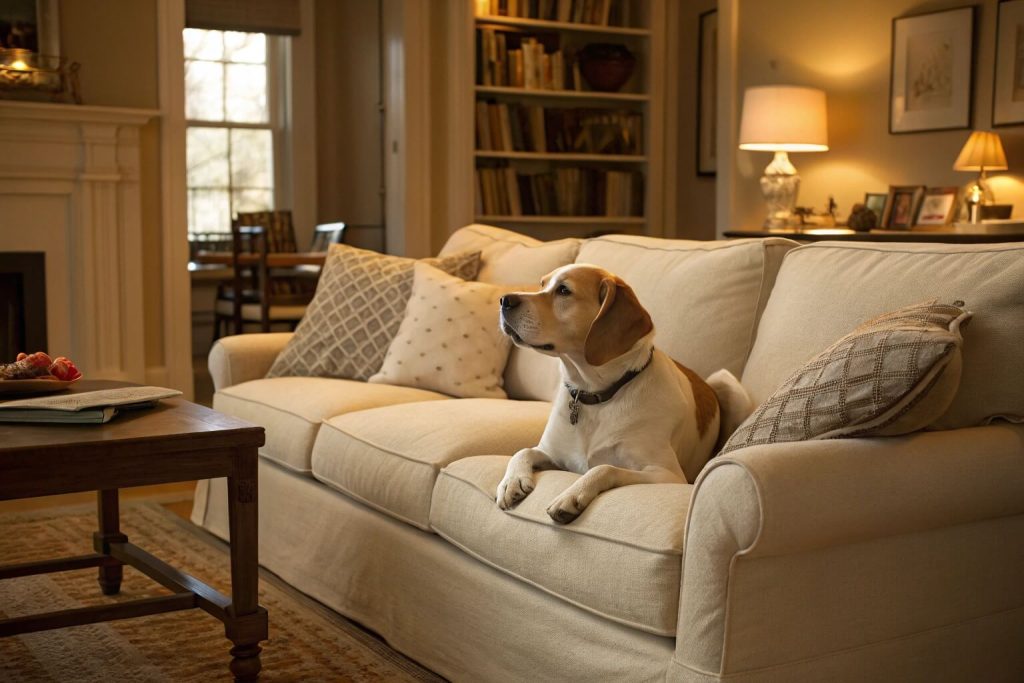
If you share your home with a furry companion, chances are you’ve faced the never-ending battle against pet hair on your furniture. Upholstered couches, chairs, and cushions seem to attract fur like magnets — especially if you own a breed that sheds year-round. While vacuuming helps, it often feels like the hair just embeds itself deeper into the fibers. So how do professionals deal with this? And what practical steps can you take at home?
In this guide, we’ll explore the most effective ways to remove pet hair from upholstered furniture, combining professional tips with DIY methods. We’ll also cover how to prevent hair from accumulating in the first place.
1. Why Upholstery Collects So Much Pet Hair
Upholstered furniture is made with woven fabrics that naturally trap fibers, dust, and debris. Pet hair, being light and static-prone, clings especially well to these textured surfaces. Materials like velvet, chenille, and microfiber can be especially problematic.
Even when you vacuum, friction and static electricity can cause hairs to weave themselves into the fabric — which is why you might feel like you’ve cleaned, only to find more hair a few hours later.
2. Vacuuming the Right Way
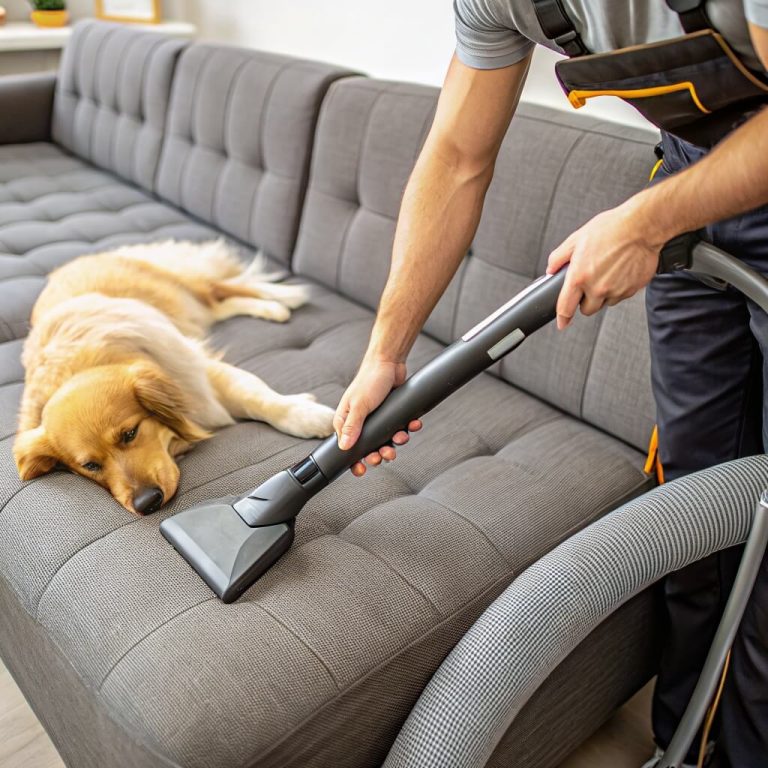
Not all vacuums are created equal. If your vacuum doesn’t have a motorized brush roll or pet hair attachment, you’re likely just skimming the surface.
Pro Tips:
Use a vacuum with a rotating brush designed specifically for upholstery.
Always vacuum in multiple directions — this helps dislodge hair from different angles.
Go slowly and apply pressure where needed.
Empty your vacuum often to maintain suction power.
Some professionals also recommend slightly misting the fabric with water before vacuuming — this can help reduce static and lift stubborn hair.
3. The Rubber Glove Method
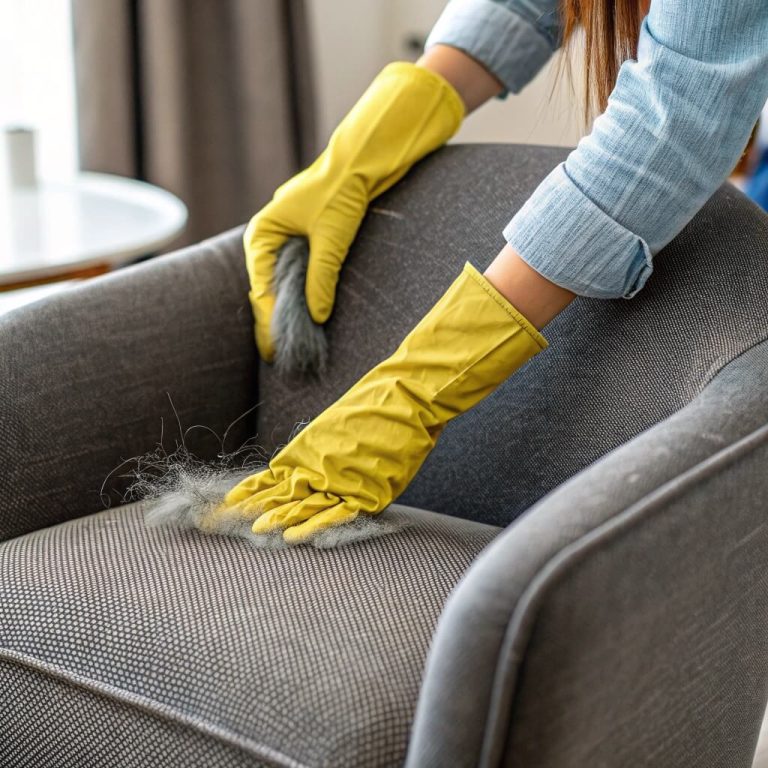
One of the oldest and most effective at-home tricks involves a simple rubber glove (the kind used for cleaning dishes). Lightly dampen the glove and run your hand along the upholstery in long strokes. Hair will ball up and stick to the glove.
Why does it work? The combination of static and surface tension pulls the hair up and out of the fabric. It’s especially useful for small areas or quick cleanups.
You can also use a rubber squeegee or a silicone pet hair brush — both work on the same principle.
4. DIY Fabric Softener Spray
This trick is often used by professionals during pre-cleaning prep.
Recipe:
1 part liquid fabric softener
3 parts water
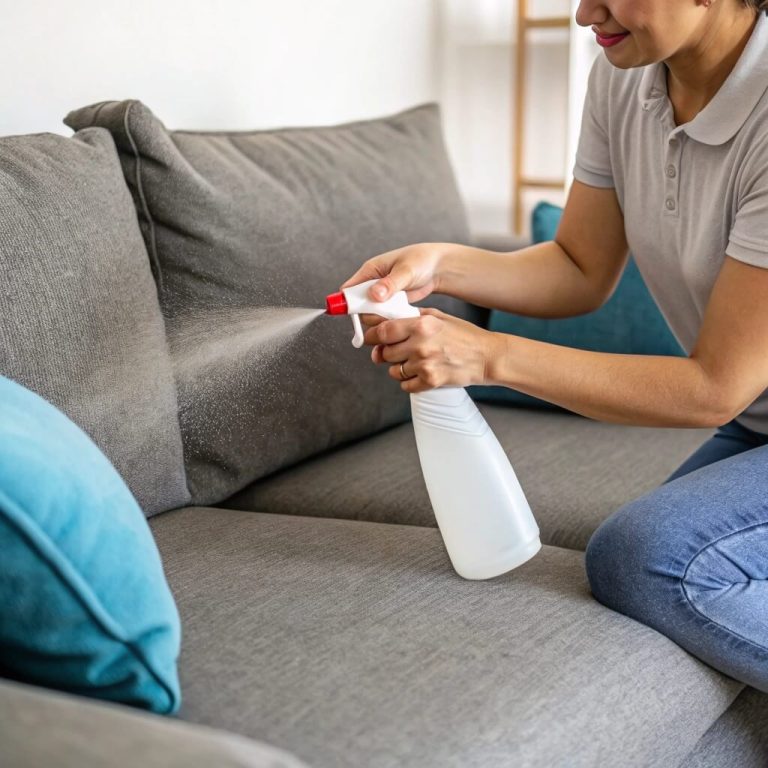
Mix in a spray bottle
Lightly mist the upholstery and wait a few minutes. Then wipe with a microfiber cloth or go over it with a vacuum. The softener reduces static cling and loosens hair stuck in the fibers.
This method is safe for most synthetic and cotton fabrics, but test a small spot first if your upholstery is delicate or made of natural fibers.
5. Lint Rollers, Tape, and Brushes
While not practical for an entire sofa, lint rollers are useful for touch-ups — especially armrests and cushions. Keep one nearby to grab stray hairs between deep cleans.
Alternatives:
Packing tape wrapped around your hand (sticky side out)
Specialized pet hair brushes with electrostatic surfaces
Avoid using abrasive brushes that can damage delicate upholstery.
6. Furniture Covers: Prevention First
Sometimes the best solution is not letting the hair settle at all.
Consider:
Washable slipcovers for your main furniture
Throws or pet blankets that are easy to shake out and launder
Placing covers in your pet’s favorite lounging areas only
This doesn’t just reduce hair — it makes cleaning faster and protects the underlying fabric from oils, scratches, and dirt.
7. Grooming: The Root of the Problem
No matter how advanced your cleaning tools, if your pet sheds excessively, the hair will keep coming.
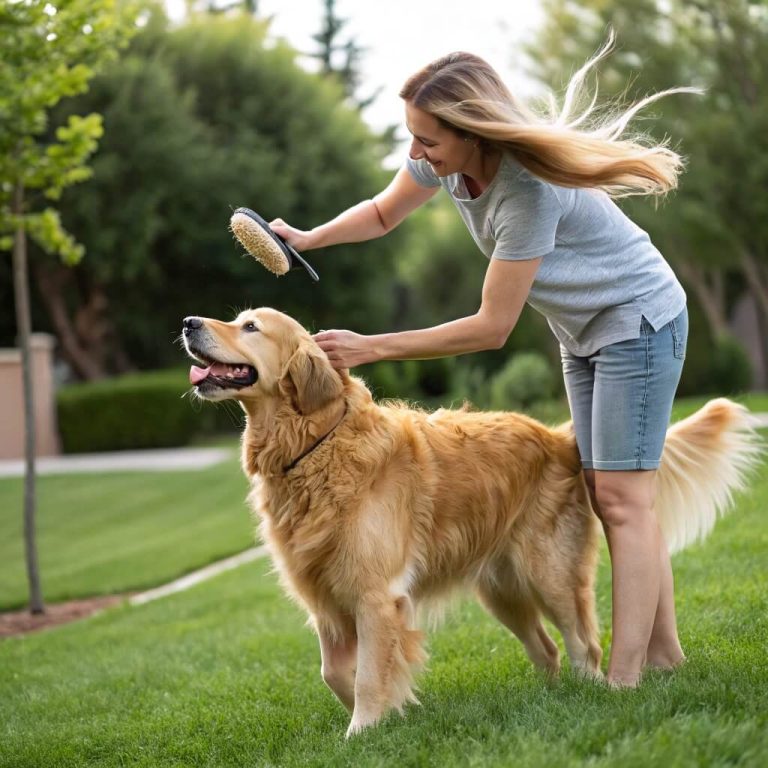
Daily brushing (especially during shedding seasons) reduces the amount of loose fur dramatically. Use the right brush for your pet’s coat type — slicker brushes, deshedding tools, or grooming mitts.
Bonus: grooming also reduces allergens, strengthens your bond with your pet, and helps monitor their skin and health.
8. When to Call a Professional
If your furniture has layers of embedded hair, odors, or allergens, even the best home tools might not be enough.
A professional upholstery cleaning service will:
Use industrial-grade extractors
Apply anti-static and anti-allergen treatments
Restore fabric brightness and texture
You should especially consider this if:
You have allergies or asthma
The furniture is expensive or antique
There’s visible matting or hair buildup in seams
9. Are the cleaning methods safe for kids and pets?
Absolutely. At Pure, we prioritize your family’s health. That’s why we use plant-based, biodegradable cleaning solutions that are free from harsh chemicals, artificial fragrances, or toxins.
These eco-friendly formulas are safe for children, pets, and allergy-sensitive individuals, making them perfect for everyday homes.
Even better? Our methods not only protect your upholstery — they also support cleaner indoor air quality and reduce environmental impact.
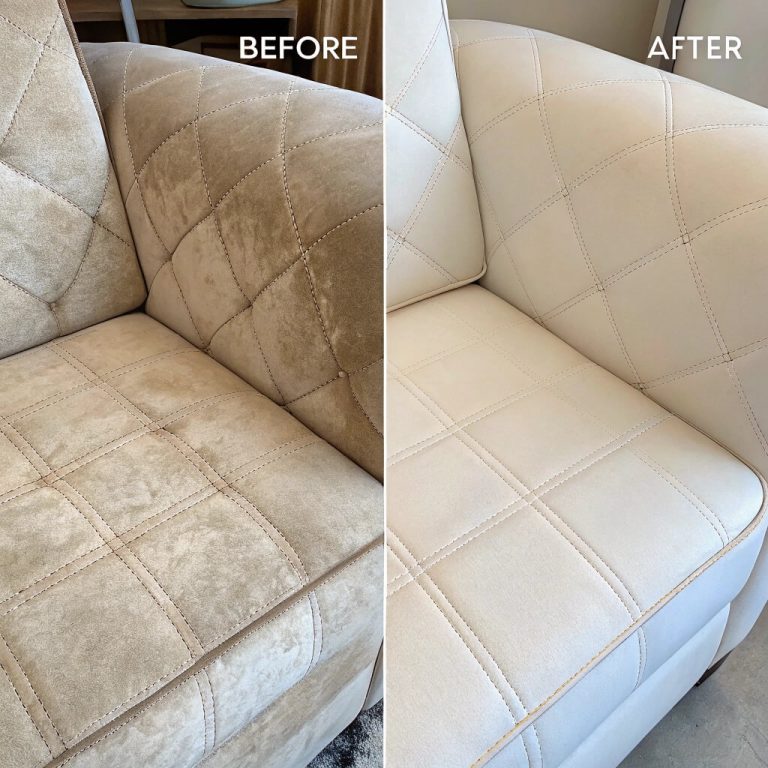
10. How to Remove Pet Stains and Odors from Upholstery
Accidents happen — but that doesn’t mean you’re stuck with lingering smells or permanent marks. Pet stains often contain proteins that bond tightly with upholstery fibers, making them hard to treat with regular cleaners.
We use specialized enzyme-based solutions that break down organic matter at the molecular level. Unlike masking sprays, these treatments neutralize odors and lift stains completely — without damaging the fabric or leaving harsh residues.
For deep-set messes, professional equipment ensures safe and effective results. The sooner you act, the better — fresh stains are easier to treat and less likely to cause long-term damage.
Ready to refresh your couch?
Conclusion
Pet hair on your couch doesn’t mean you have to choose between cleanliness and companionship. With a mix of smart tools, consistent habits, and occasional professional help, you can enjoy a fur-free home without sacrificing snuggles on the sofa.
Your furniture — and your lungs — will thank you
You might also like


Need help with your furniture?